
Sustainability
We are a third-generation family business. We grow, source and pack onions, garlic and shallots, and nothing else. That focus runs three generations deep, and it means we think in decades, not quarters.
95%+
Cut in waste to landfill since 2017
1.4MW
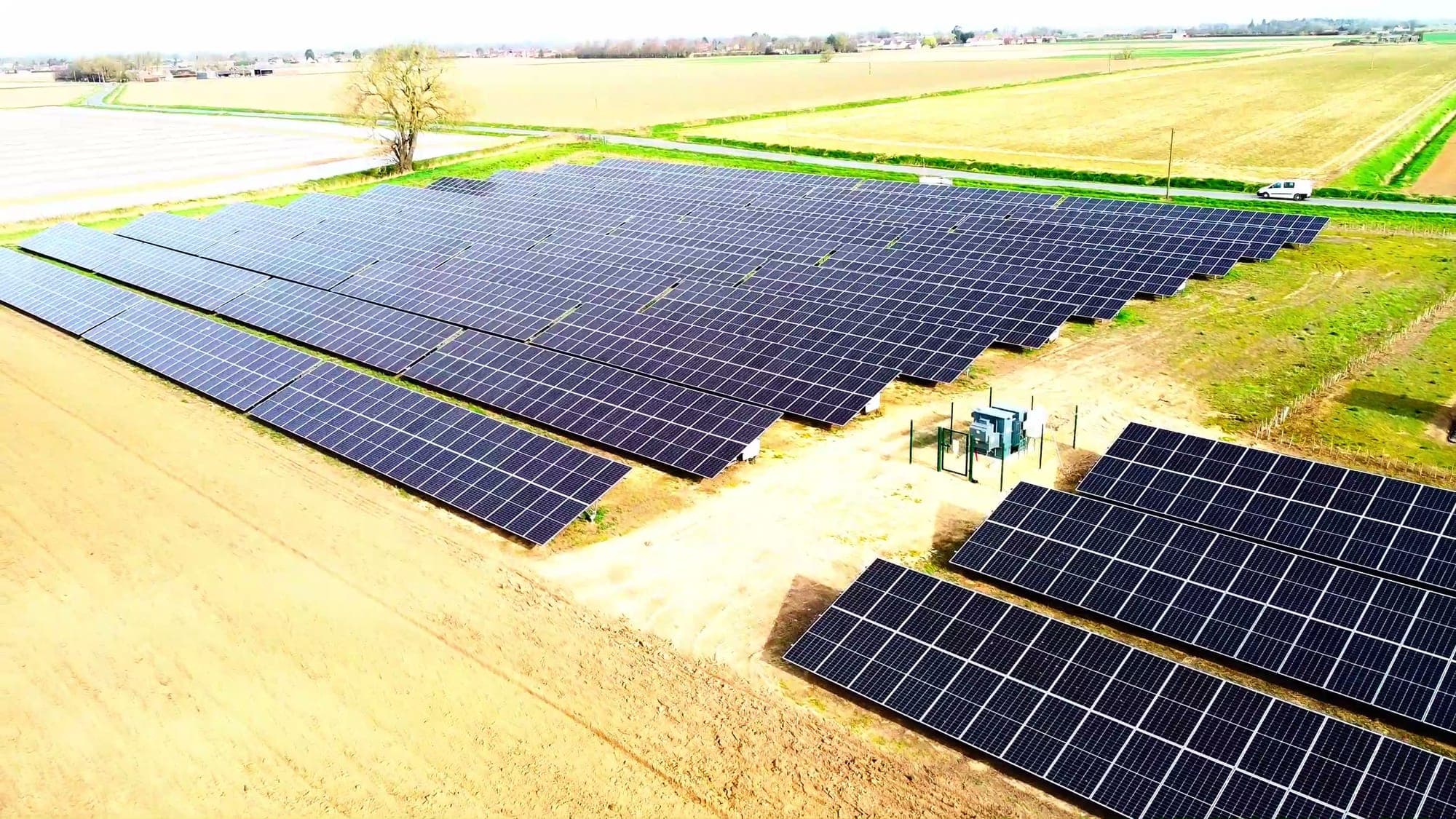
Solar array at Moulton, live 2024
18%
Of site electricity from our own solar, 2025
2018
Reporting to WRAP food waste roadmap since
Figures reviewed September 2026
01 / Energy
In 2024 we switched on a 1.4MW solar array at our Moulton site. In its first full year it supplied around 18% of the site's electricity. The rest we buy on a REGO-backed renewable tariff, and we keep chipping away at demand through LED lighting, smarter refrigeration controls and demand-side response.
CLOSED LOOP / COMPOST RETURNED TO FARMLAND
02 / Waste
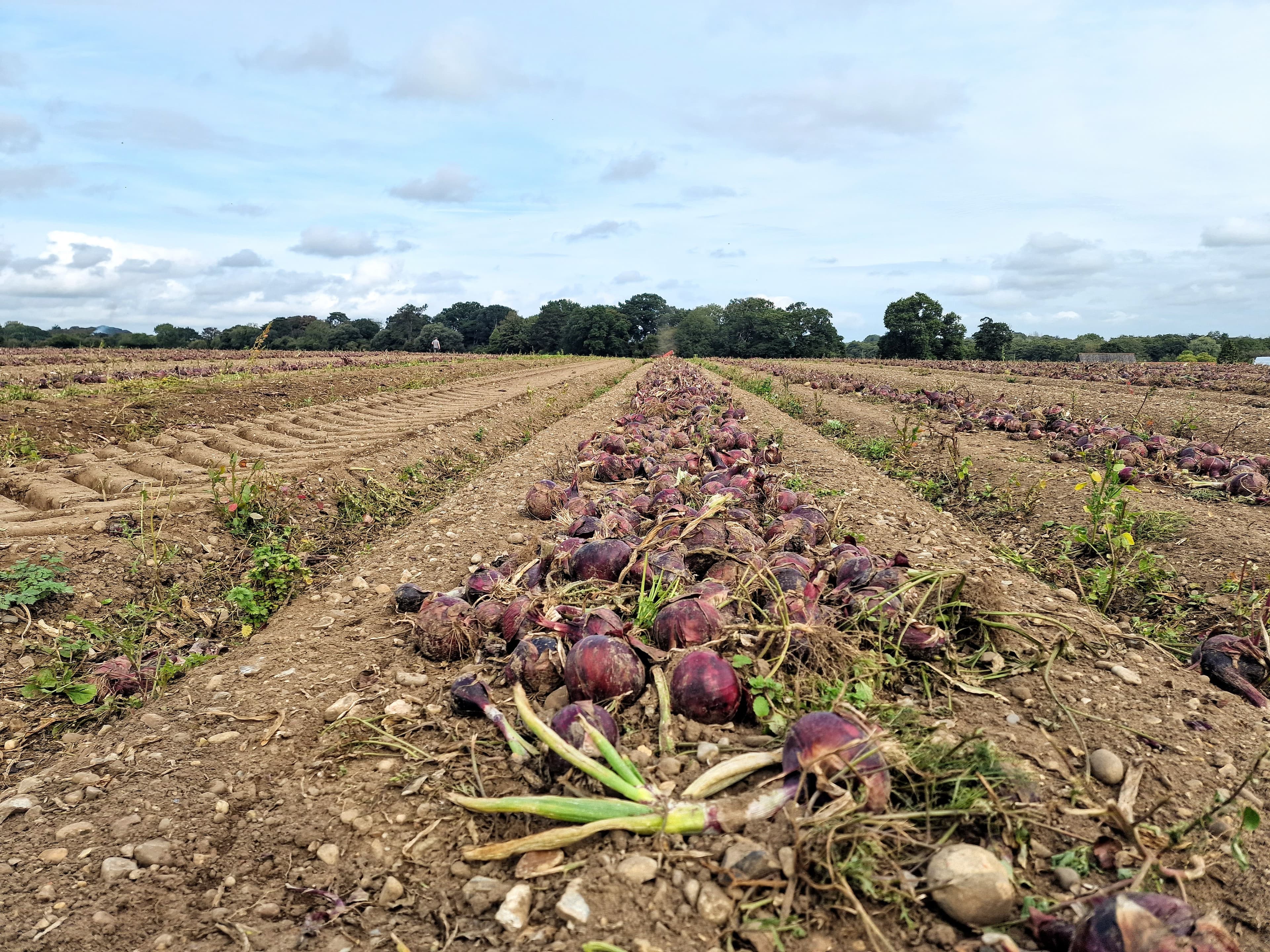
We have cut the waste we send to landfill by more than 95% since 2017, from 120 tonnes to just one. We handle around 10,000 tonnes of onion waste a year, and virtually everything finds a use, whether that is food manufacturing, animal feed or other processing routes. Only genuinely rotten onions and peel go to our own purpose-built composting facility, and the compost is spread back on the farmland that grew the crop. A closed loop, on our doorstep.
We have reported into the WRAP Food Waste Reduction Roadmap every year since 2018, because you cannot cut what you do not measure, and we are a signatory to the WRAP Courtauld 2030 Commitment.
03 / Water
Onions need water. So does the land around them, and the communities that depend on the same catchments. We built our own on-site reservoir to harvest rainwater and reduce our draw on local water sources, and we sit on the steering committee of the Norfolk and Cambridge Water Stewardship Group, working alongside other land managers to protect catchment health in one of the UK's most water-stressed agricultural regions.
04 / Packaging
We were the first UK supplier to introduce paper packaging for supermarket onions, launching paper-packed pickling onions with Waitrose. We are a member of the UK Plastics Pact and are committed to reducing unnecessary packaging and improving recyclability, while making responsible trade-offs between material reduction and food waste. Protecting shelf life is part of the sustainability equation too.
05 / The farms behind the crop
More than 80 growers
Every UK grower we contract is Red Tractor or GLOBALG.A.P. certified, most hold LEAF Marque, and we are working to make LEAF Marque universal across our contracted UK base by 2028. On the farms we visit we see solar arrays, anaerobic digestion, reduced cultivation and decades-long soil-health work. Our job is to measure it properly and give those growers the credit the data supports.
06 / Carbon
Numbers we can stand behind
We report our emissions under SECR and are extending that work into our supply chain, which is where the vast majority of a fresh-produce footprint sits. We would rather publish numbers we can stand behind than headlines we cannot.
07 / Our community and research
340 people in the Fens
We employ around 340 people in the Lincolnshire Fens. We open our gates for Open Farm Sunday and a Schools Farming and Countryside Day, and we partner with Cranfield University and a national research consortium on the soil and disease challenges that will define the next generation of British onion growing. Our three-year Knowledge Transfer Partnership with Cranfield will track over 150 parameters from seed to shelf, including soil health, environmental data and storability.
FAQ
How much of the Moulton site's electricity comes from its own solar?
A 1.4MW solar array switched on beside the Moulton site in 2024 and supplied around 18% of the site's electricity in its first full year. The remainder is bought on a REGO-backed grid tariff.
What happens to onion waste at Moulton?
Around 10,000 tonnes of onion waste a year are handled at Moulton and virtually all of it finds a use in food manufacturing, animal feed or other processing routes. Only genuinely rotten onions and peel go to the site's own composting facility, and that compost is spread back on the farmland that grew the crop.
How much waste does Oldershaw Group send to landfill?
Waste to landfill has been cut by more than 95% since 2017, from 120 tonnes a year to one tonne. Food waste has been reported into the WRAP Food Waste Reduction Roadmap every year since 2018.
Does Oldershaw Group have a net zero target?
No. Scope 3 emissions have not yet been fully baselined, there is no validated science-based target in place, and nature and biodiversity metrics across the growing estate are still in development. Energy and carbon are reported annually under Streamlined Energy and Carbon Reporting.
Is Oldershaw Group LEAF Marque certified?
LEAF Marque is held by farms, not by packers. Most of the UK farms Oldershaw Group sources from hold LEAF Marque, and the ambition is to reach it across all contracted UK growers by 2028.
Which food safety and ethical standards does the site hold?
The Moulton packhouse is certified to the BRCGS Global Standard for Food Safety at grade AA+. All growers are certified to Red Tractor or GLOBALG.A.P., the site is accredited to pack and process organic produce to Soil Association standards, and Oldershaw Group is a Sedex member with SMETA audits across the supply chain.

REF 01
BRCGS Global Standard for Food Safety
Our packhouse is certified to the BRCGS Global Standard for Food Safety, graded AA+.
REF 04
LEAF Marque
Most UK farms we source from hold LEAF Marque; we are working towards it across all contracted UK growers by 2028.
REF 05
Soil Association
Accredited to pack and process organic onions, shallots and garlic to Soil Association standards.
REF 07
Climate Change Agreement / ESOS
Signatory to the FDF Climate Change Agreement; ESOS Phase 3 completed.
What we are still working on
Our Scope 3 emissions have not yet been fully baselined. We do not have a validated science-based target in place. Nature and biodiversity metrics across our growing estate are in development.
We are not going to claim a destination we have not reached. But we are moving, with structure and intent, and we will report on progress as we make it.
Meet the growers behind the crop