.jpeg)


British onions have been hit particularly hard as the crop is so heavily concentrated in one of the worst affected areas, East Anglia. Around 90%of the British onion crop is grown in East Anglia, where the Met Office reported just 2mm of rainfall for the whole of July – approximately 96%below average.
The exceptionally dry conditions have continued into August, with rainfall remaining extremely limited across eastern England.
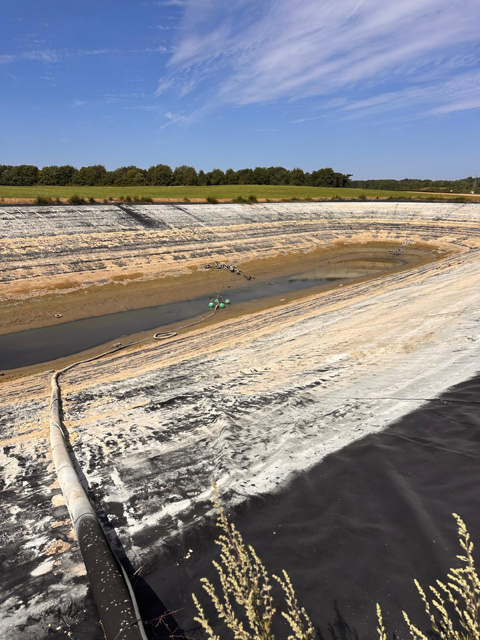
Despite significant investment in irrigation, water shortages and restrictions have prevented some growers from irrigating at key stages. As a result, crops have matured exceptionally early, with some finishing more than a month ahead of normal.
This has reduced plant populations, bulb size and marketable yields.
The conditions have also highlighted the increasing importance of water security for British growers. BOPA believes more needs to be done to support growers investing in irrigation and water storage, particularly in key food-producing areas such as East Anglia.
Ben Collins, Chairman of the British Onion Producers’ Association (BOPA), said:
“This is the most challenging season ever encountered by the British onion industry. The combination of prolonged drought, extreme heat and limited water availability has put this year’s crop under extreme pressure. It is clear that yield and bulb size will be a challenge this season, while the extreme growing conditions are also creating significant concerns around quality.”
Vegetables suffer from stress just as any of us would if we had to endure temperatures of 25°C to 35°C for a month with just 2mm of water. For onions, this heat stress can increase the risk of Fusarium, commonly known as base rot. As a result, on top of a huge yield loss and a much smaller crop in terms of bulb size, quality is also expected to be a major issue this season.
Similar conditions across Europe are also affecting production, with yields in key regions forecast to be over 25% below normal.
British growers will continue to maximise quality and availability, but the situation remains serious: supplies will be tighter, sizes smaller, quality reduced and the 2026 crop substantially earlier and shorter in supply than normal.

-Open-Farm-Sunday-2016---Discover-the-World-of-Farming---YouTube---Google-Chrome.jpeg)